Oil Reverses Course After US-Iran Ceasefire
Financial markets staged a sharp reversal today after the United States and Iran announced a two-week ceasefire in their conflict. The agreement, brokered with Pakistani mediation and endorsed by both sides, calls for an immediate halt to military strikes, a phased reopening of the Strait of Hormuz to commercial shipping, and the start of direct talks toward a longer-term deal. The news lifted the immediate threat of escalation and delivered a much-welcomed wave of relief through to risk assets.
.jpg)
With the Strait of Hormuz set to reopen, oil prices reversed course sharply on the prospect of barrels once again moving freely through the Persian Gulf. This sudden easing of global supply pressures has been a clear boon for stocks, removing a major inflationary headwind and lifting risk sentiment across the board. With roughly one-fifth of global seaborne oil passing through the chokepoint, the prospect of normalised tanker flows has rapidly drained the geopolitical risk premium that had kept prices elevated. Oil led the retreat, with Brent crude dropped more than 8% in early Asian trading, while WTI fell sharply also.
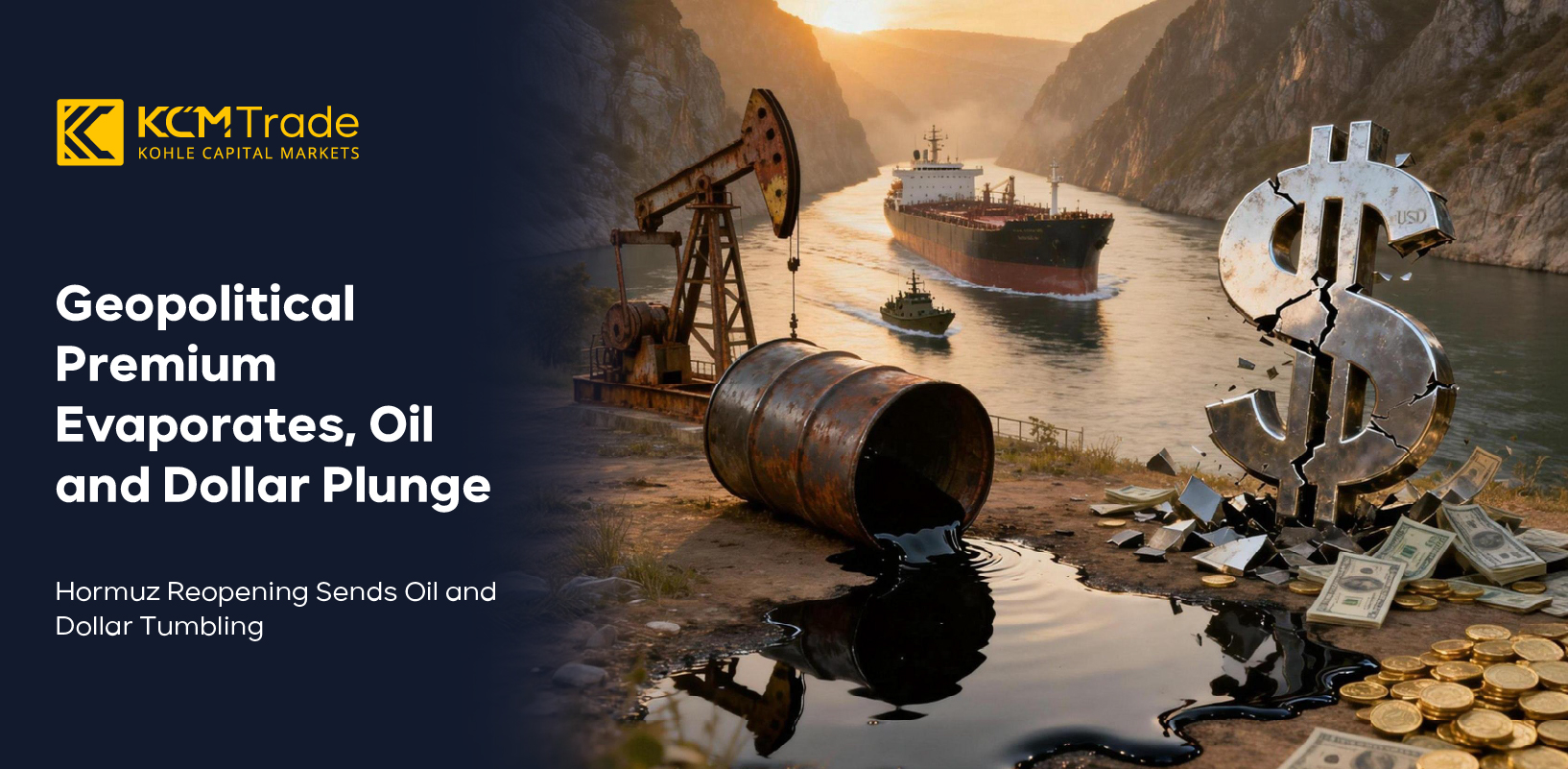
The US dollar followed suit. The Dollar Index (DXY) slipped below the 99 level as lower oil prices eased inflation concerns and reduced the likelihood of a hawkish shift from the Federal Reserve. Higher energy costs had been the single biggest driver of the greenback’s strength since the conflict began; with that pressure now easing, the USD’s appeal as an inflation hedge faded. The DXY was last seen trading around 98.90, having peaked around 100.50 in late March.
Gold reclaimed its mojo after weeks of uncharacteristic weakness, having been weighed down by a stronger dollar and rising yields. The precious metal surged back towards $4800 today in response to the oil price retreating and the dollar softening. Next resistance levels to watch on the topside include $4850 and $4935, with support at $4635. If oil prices and the Dollar remain on the backfoot during this two-week ceasefire, gold stands a good chance of getting back to the $5k level in the near-term. But any signs that ceasefire is not holding could reignite oil and undo gold’s ambitions to move higher.
Risk assets broadly joined the party on the ceasefire news. Asian equity indices posted solid gains across the board, while US stock futures climbed in overnight trading, signalling that the relief rally is likely to extend into the New York session. Yet the mood remains one of cautious optimism rather than outright celebration. The ceasefire is only two weeks long, and markets will be watching closely to see whether shipping through the Strait of Hormuz normalises as promised and whether the fragile truce can pave the way for a more durable peace agreement.

While there are still plenty of ‘ifs’ surrounding this ceasefire, particularly around its durability and whether it can lead to a lasting resolution, traders are clearly relieved that at the very least a window has opened for the normalisation of energy supplies.
Attention now turns to the rest of the week’s economic calendar, with core PCE on Thursday and US CPI on Friday expected to provide the next major test for inflation expectations. But even these headline numbers may play a secondary role to oil. For the foreseeable future, the direction of crude prices remains the clearest real-time barometer of market sentiment.



.jpg)


.jpg)