Weak US September Non-Farm Payrolls Cool Rate Hike Expectations
Last Friday, the U.S. non-farm payrolls data for September came in unexpectedly weak, becoming the key factor driving financial markets that day. All three major U.S. stock indices closed higher, with the Nasdaq hitting a new intraday record high. Gold prices initially surged as expectations for a Federal Reserve rate hike cooled, but subsequently fell, weighed down by a strengthening U.S. dollar and high bond yields.
The September non-farm payrolls report released by the U.S. Bureau of Labor Statistics showed that seasonally adjusted non-farm employment increased by only 29K—far below the market expectation of 90K—while the unemployment rate rose from 4.1% to 4.2%. Of particular concern to the market was the significant downward revision of employment figures for the previous two months: July's employment count was lowered by 31K, resulting in a net loss of 10K jobs, while August's figure was revised down by 29K to a gain of 133K. This implies that the U.S. added an average of only about 17K jobs per month over the past three months, signaling a clear slowdown in hiring momentum.
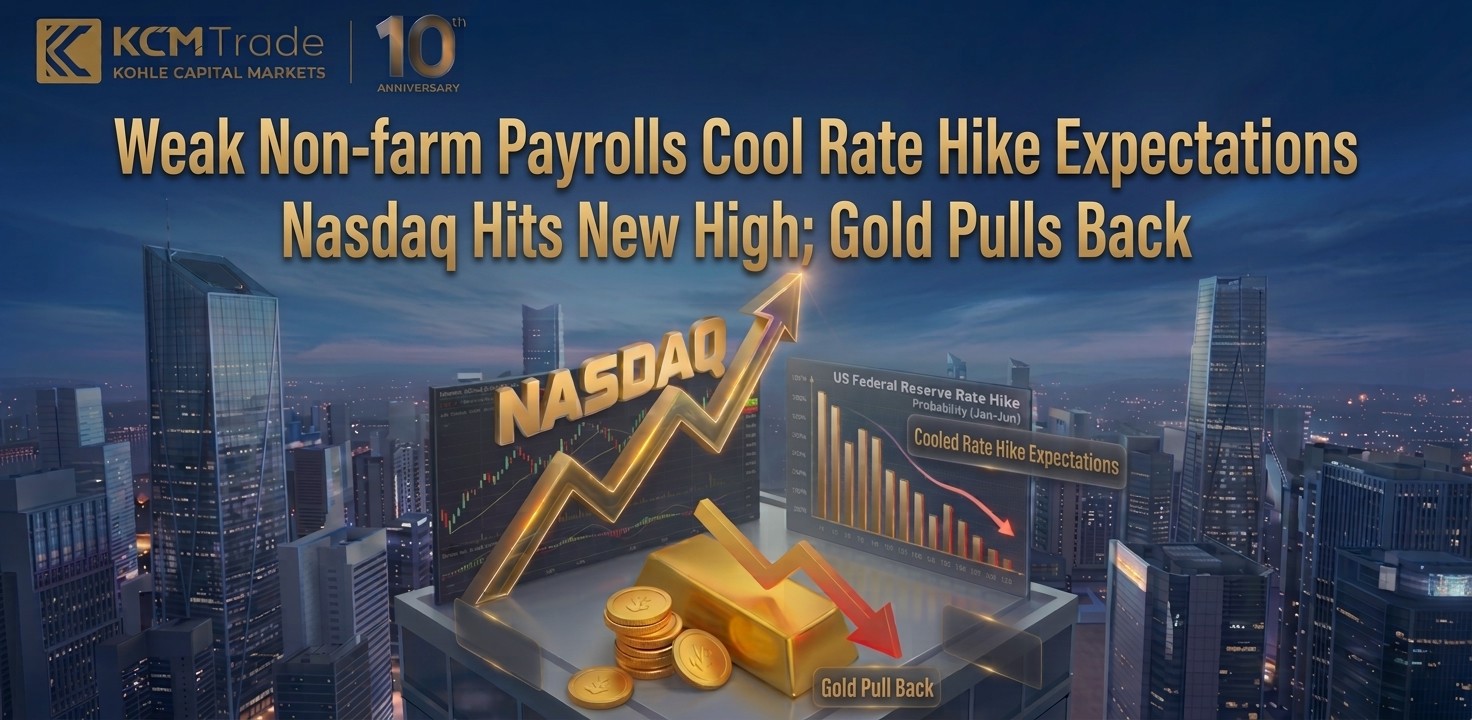
However, this seemingly weak report acted as a catalyst for risk assets. The market logic was that a cooling labor market would reduce pressure on the Federal Reserve to raise interest rates further, thereby providing breathing room for the stock market. Market expectations for a Fed rate hike in October dropped from approximately 28% to 17%, with a consensus emerging that the Fed would keep interest rates unchanged at its October meeting. Consequently, the three major U.S. stock indices all closed higher. The Nasdaq Composite Index touched 27,353.68 points at one stage, surpassing the previous intraday record high of 27,288.79 points set on September 22; notably, the Nvidia's stock price hit an all-time intraday high, driving strength across the entire technology sector.
The gold market experienced a rather dramatic trend following the release of the non-farm payrolls data. Weighed down by weak economic data, the market scaled back bets on a near-term Federal Reserve rate hike; gold prices initially surged over 1%, briefly breaching the $4,200-per-ounce mark. However, this rally proved short-lived. The US dollar maintained its upward momentum for the week, and with long-term US bond yields remaining elevated, non-yielding gold came under pressure and reversed course, dropping to a low of $4,125 per ounce. While cooling expectations for a Fed rate hike may offer gold some short-term respite, but the overall trend remains bearish; resistance levels are seen at $4,190–$4,260, with support at $4,050–$3,950.

Last Friday’s market activity clearly highlighted the central theme driving current markets: the Federal Reserve's interest rate trajectory. The unexpectedly weak September non-farm payrolls report significantly dampened expectations for a rate hike, thereby reshaping the short-term outlook for US equities, bonds, and the dollar. Yet, gold’s subsequent decline serves as a reminder to traders that the lingering effects of a strong dollar and high bond yields continue to weigh on non-yielding assets. Looking ahead, the market will focus on the Federal Reserve’s policy meeting on October 28 to see if a "pause" in rate hikes will indeed materialize.

.jpg)



.jpg)